Decision Travel Planner 2026: How to Stop Trip Chaos and Plan Like a Pro
While many people get caught up in New Year’s resolutions, smart travelers start planning their next big adventure. But we all know that jumping from “dreaming about a trip” to actually booking it isn’t quite as simple as it sounds: suddenly, reality hits you with 47 open browser tabs, 200 conflicting reviews, and a budget that triggers immediate financial panic before you’ve even zipped your suitcase.
This isn’t just a fleeting feeling; it’s a reality backed by hard data. A recent study of 29,000 travelers across 33 countries (Booking.com) found that 77% are leaning toward smart travel technologies, but without a centralized system, these tools quickly become suffocating administrative chaos. Plus, 51% of travelers in America experience increased stress due to disorganized planning, and 37% are forced to delay or cancel their trips entirely due to planning fatigue (Wyndham Vacation Rentals).
If you’ve ever arrived at your destination only to discover you missed a mandatory booking, missed a critical booking window, or burned through half your budget on day one, you know exactly what this chaos costs. This article will reveal the root cause behind this organizational failure and show you how a dedicated Decision Travel Planner 2026 can transform your trip from an administrative nightmare into a seamless, organized experience in just 30 minutes
Why Your Brain Freezes Before Your Trip Even Begins
The High Price of Information Overload:
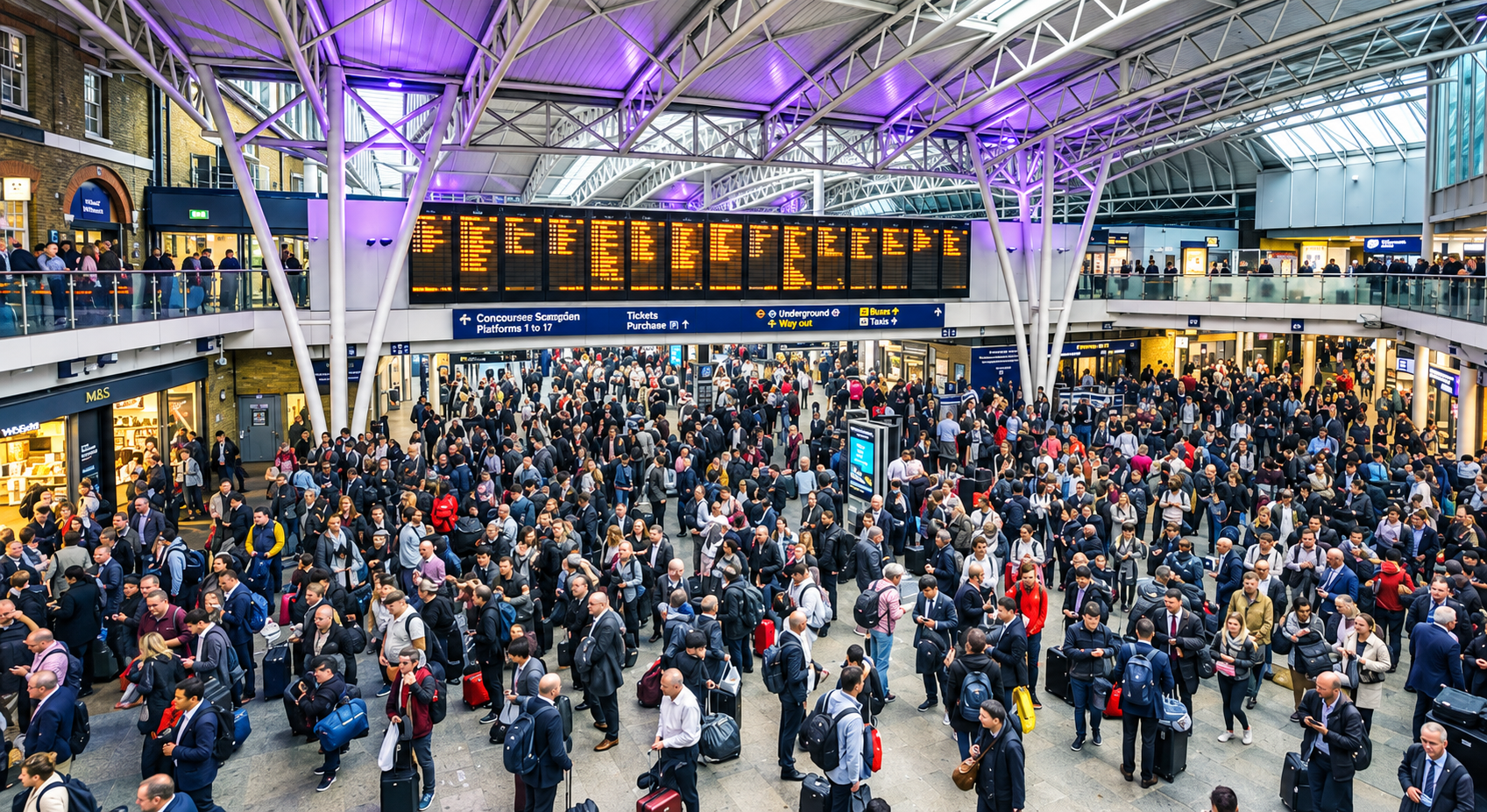
Here’s the unvarnished truth about this problem: planning a trip today has become harder than the trip itself. A recent study by Wyndham Vacation Rentals revealed that 51% of American travelers admit they feel more stressed before planning any trip compared to last year. And the culprit isn’t expensive flight tickets or hotel bookings—it’s the paralysis of too many choices staring back at you from your computer screen. Think about it logically: you open your laptop, head to a global travel platform, and suddenly you’re faced with hundreds of hotels and thousands of reviews that leave your mind spinning. Half of them say “perfect location,” while the other half say “terrible neighborhood.” Who do you trust? This is what’s called choice paralysis. And the numbers are brutal: 67% of travelers fall into this exact trap because of information overload. They can’t choose, they can’t move forward—they just freeze completely.
The Real Cost of Decision Fatigue:
Here’s what happens when you can’t make a decision: you open your laptop and spend three full hours in front of it, staring at hundreds of different options—especially if you have no prior knowledge of the booking world and its labyrinths. Your brain starts to fatigue from all these choices, and eventually, you close it and return to square one without any noticeable progress. And by the time you finally succeed in booking a hotel and a flight ticket, you’re completely exhausted.
And it gets worse. This isn’t just about feeling tired; it has real, tangible consequences. In fact, this exact planning-related stress is the primary reason why 37% of travelers are forced to delay or cancel their trips entirely. They simply don’t go at all. This isn’t just a passing annoyance—it’s stealing your vacation before it even begins.
The “Flexibility” Trap: Why “Booking Later” Backfires
The Illusion of Spontaneity
And here lies the second mistake, one of the most common errors, leading to disastrous results for travelers during their trip. Many travelers think they’re being smart when they say: “I’ll just book the flight and hotel, and figure out the rest when I get there.” They call this “staying flexible.” But the statistics say the exact opposite: 30% of travelers don’t feel truly relaxed until the second day of their trip (or even later). Why? Because the first day is wasted entirely in a state of panic about what to do, where to go, and how to get there.
A Case Study: The 9-Day Route Disaster
Let me show you what this looks like in reality. A couple from New York posted a question on TripAdvisor asking for advice. They were planning a 9-day trip to Switzerland and Italy in late August. Their plan: fly into Zurich, spend 3 nights in Interlaken, then take the train to Lake Como for 2 nights, then the train to Rome for 2 nights. Sounds like a great plan, right? But here’s the problem. They mentioned they didn’t want to book train tickets or activities in advance. They wanted to “stay flexible.” What they didn’t realize is that every destination has its travel season, and this couple chose peak season in Europe. What does that mean? Long lines, crowded places, and booking problems for any activity. By trying to “stay flexible,” they were actually signing themselves up for:
- Standing in train stations for hours hoping to get a seat
- Paying double the price for last-minute tickets
- Wasting entire days just moving between cities with heavy bags
This isn’t flexibility—this is chaos. Real flexibility means booking the hard stuff in advance (like trains and limited-capacity activities) and leaving the easy stuff for spontaneity (like where to eat dinner or which café to sit in).
The Worry Spiral: When Small Details Take Over
Then comes the third problem—the one that devours hours of your time. You start worrying about small details that don’t actually matter. Like a traveler who posted a question online asking about a specific festival in China in September 2027, worried it might ruin their trip. They asked questions like: “Is this a real problem? How bad is it? Can I avoid it by staying in one place?” The truth is, they were wasting all that mental energy on this tiny detail, to the point they probably didn’t pay attention to the big stuff. Like booking trains, setting a budget, or planning the actual trip route. This is what I call the “worry spiral.” You focus on something small and scary (a festival, weather forecast, bad review) and forget to plan the things that actually matter. The result? You arrive at your destination stressed, unprepared, and wondering why you even bothered.
The Real Problem And the Simple Solution
Why Your Mindset Was Never the Enemy:
Here’s what’s really happening. You’re not bad at planning, and you’re not lazy. You’re just trying to do something impossible: managing hundreds of choices, details, and decisions all by yourself, in your head, using nothing but browser tabs and note-taking apps. No wonder you’re stressed. But here’s the good news: data confirms that adopting a structured Decision Travel Planner 2026 ( drastically reduces travel stress. Just having a plan. Just knowing what’s coming next. That’s the solution. You don’t need to spend 20 hours researching. You don’t need to compare 500 hotels. You don’t need to worry about every tiny detail.
Take Back Control in 30 Minutes:
At the end of the day, we travel to live in the moment—not to drown ourselves in planning details that only make things more complicated. Those 48% of travelers who genuinely enjoy the planning stage share one secret: they don’t rely on scattered notes. Instead, they use a centralized Decision Travel Planner 2026 to streamline everything.
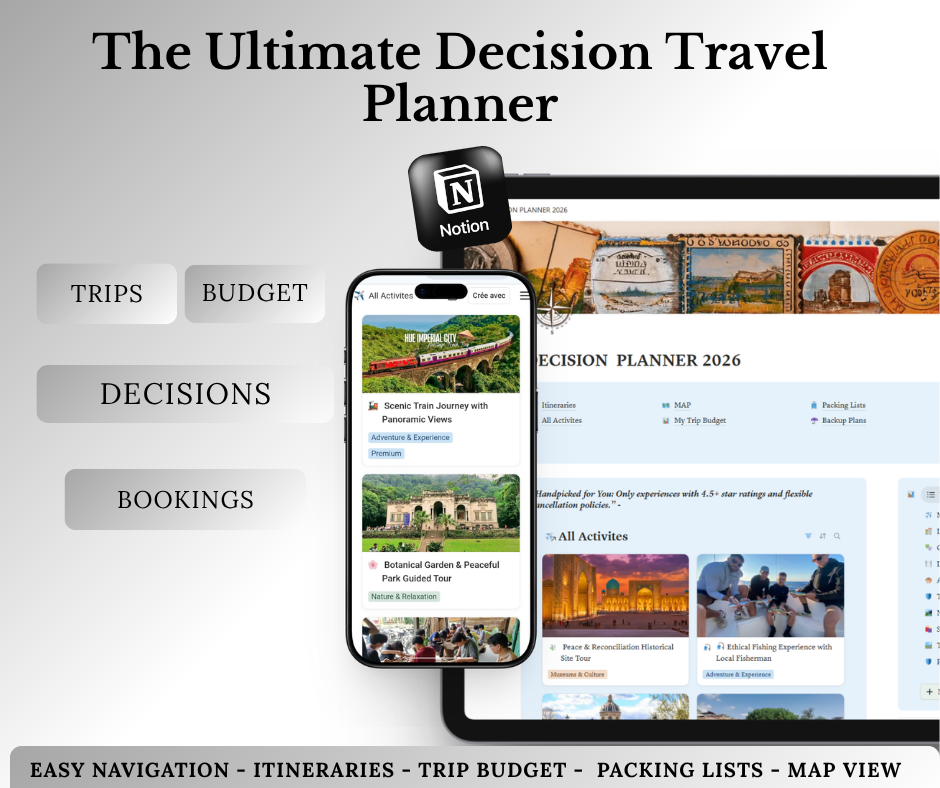
As an example, I’m sharing with you a free, simple Notion template designed to act as your ultimate Decision Travel Planner 2026 . I built this system with one clear vision in mind: to make things as easy as possible for travelers like you. It also includes links to various activities, which serve as gentle inspiration to help you thoughtfully choose the experiences you love, alongside whoever is traveling with you.
You don’t have to spend another weekend drowning in browser tabs. Just duplicate the template, take a deep breath, and let your Decision Travel Planner 2026 help you reduce your stress significantly.